Bulk Bags for Dry Food in Canada: A Complete Buyer's Guide
FIBC bulk bags are the workhorse of Canadian dry food logistics. This guide covers bag types, weight ratings, food-grade requirements, and how to choose the right dry food co-packer in Toronto or bulk bag supplier in Ontario.
Bulk Bags for Dry Food in Canada: A Complete Buyer's Guide
If you move dry food at volume in Canada, flour, rice, sugar, lentils, chickpeas, oats, spices, or any other granular or powdered commodity, bulk bags are almost certainly part of your supply chain.
Flexible Intermediate Bulk Containers (FIBCs), commonly called bulk bags, super sacks, or tonne bags, are the standard packaging format for dry food at the industrial and food service scale. They are efficient, cost-effective, and versatile, but choosing the wrong bag for your product or application creates real risk.
This guide covers everything Canadian food manufacturers, importers, and distributors need to know about bulk bags for dry food.
What Is an FIBC Bulk Bag?
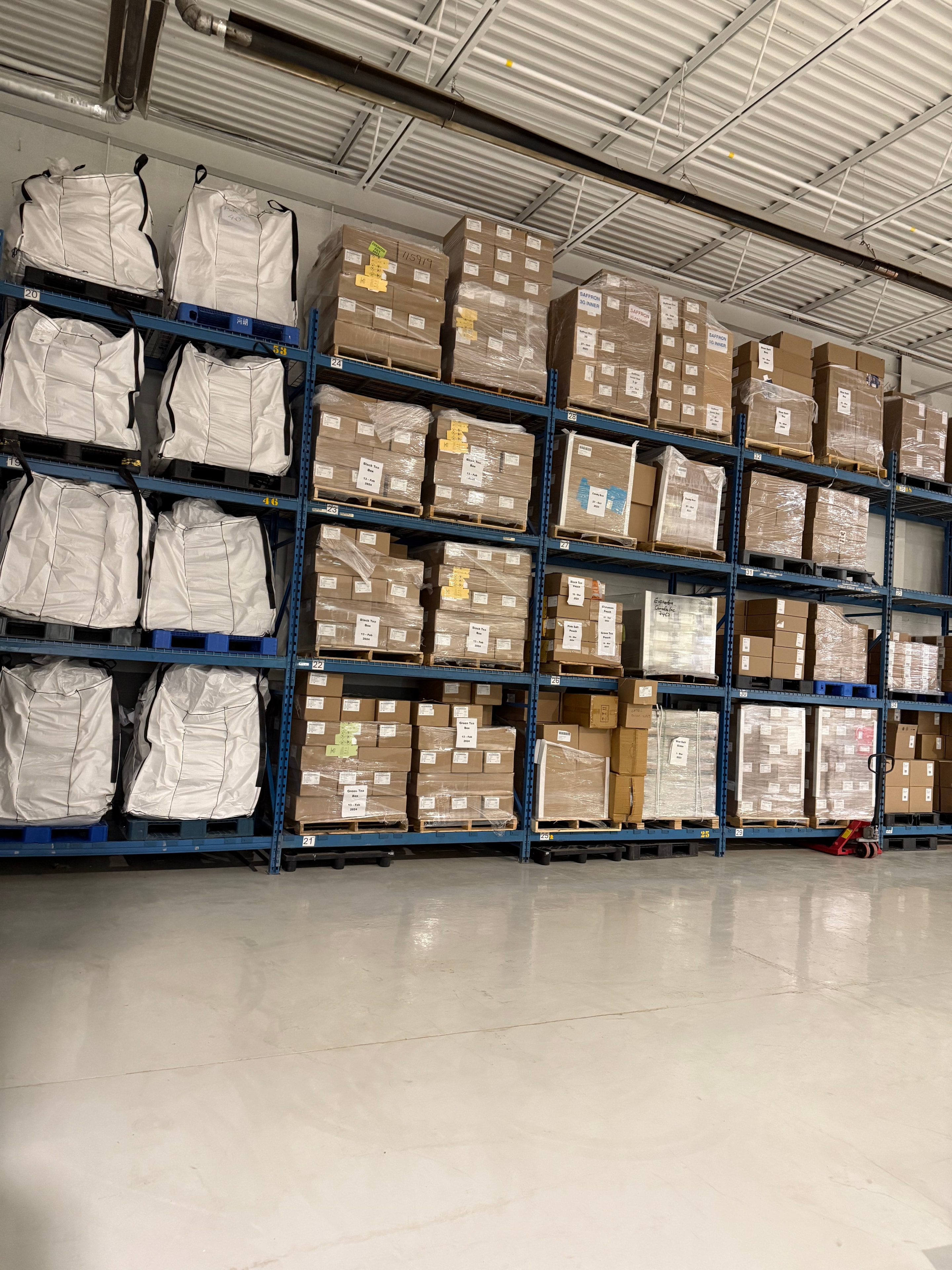
An FIBC (Flexible Intermediate Bulk Container) is a large, flexible woven polypropylene bag designed to store and transport bulk dry materials. Standard capacities range from 500 kg to 2,000 kg (1 tonne), though custom sizes are available.
FIBCs are used across industries, agriculture, chemicals, construction, mining, but food-grade FIBCs have specific requirements that distinguish them from industrial-grade bags.
Types of Bulk Bags
By Filling and Discharge Method
- Top fill / bottom discharge, the most common configuration for dry food. Product is loaded through a top spout or open top and discharged through a bottom spout or full-open bottom. Suitable for flour, sugar, grains, and most granular products.
- Top fill / top discharge, less common for food applications. Used where bottom discharge is not practical.
- Duffle top / spout bottom, a large open top (duffle) for easy filling with a discharge spout at the bottom. Common for irregularly shaped or large-particle products.
- Fully open top / fully open bottom, maximum filling and discharge flexibility. Used for products that do not flow freely through spouts.
By Loop Configuration
- 4-loop bags, the standard configuration. Four lifting loops at the corners allow handling by forklift or crane. Suitable for most food applications.
- 1-loop (sling) bags, a single continuous loop around the bag. Less common in food applications.
- 2-loop bags, two loops for specialized handling equipment.
By Liner Type
For dry food applications, the liner is critical:
- No liner, suitable for products that are not moisture-sensitive and where contamination risk is low. Not recommended for most food applications.
- Form-fit liner, a polyethylene liner that conforms to the bag shape. Provides moisture barrier and contamination protection. Standard for most food-grade applications.
- Tubular liner, a simple tube of PE film inserted into the bag. Less expensive than form-fit but provides adequate protection for many dry food products.
- Barrier liner, multi-layer liner with enhanced moisture and oxygen barrier. Used for products with strict shelf life requirements (e.g., spice powders, specialty flours).
Food-Grade FIBC Requirements in Canada
Not all bulk bags are food-grade. For dry food applications in Canada, your bulk bag supplier must meet specific requirements:
Material Safety
Food-grade FIBCs must be manufactured from virgin polypropylene, no recycled or reclaimed material. The woven fabric, liner, and all contact surfaces must be free from contaminants and comply with applicable food contact material regulations.
In Canada, food contact materials are regulated under the Food and Drugs Act and associated regulations. Suppliers should be able to provide a Declaration of Compliance confirming that their bags meet food contact requirements.
Manufacturing Hygiene
Food-grade bags should be manufactured in a dedicated food-grade production environment, separate from industrial bag production. Cross-contamination from non-food materials (chemicals, minerals, construction materials) is a real risk in facilities that produce both food and non-food bags.
Traceability
Each bag should be traceable to its production batch. This supports recall management and quality investigations. Look for bags with batch codes or production lot markings.
SQF or HACCP Certification at the Packaging Supplier
For brands supplying SQF-certified retailers, your packaging supplier's food safety certification matters. A packaging supplier with SQF or HACCP certification provides documentation that supports your own food safety management system.
Safe Working Load (SWL) and Safety Factor
Every FIBC has a rated Safe Working Load (SWL), the maximum weight it is designed to carry. Standard SWLs for food applications are 500 kg, 1,000 kg, and 1,500 kg.
FIBCs are also rated by safety factor, the ratio of the bag's tested breaking strength to its SWL. The standard safety factor for most food applications is 5:1, meaning a 1,000 kg SWL bag is tested to 5,000 kg before failure.
For applications involving stacking, elevated handling, or products with high bulk density, a higher safety factor (6:1 or 8:1) may be appropriate.
Never exceed the rated SWL. Overloading FIBCs is a leading cause of bag failure and workplace injury.
Common Dry Food Applications in Canada
Flour and Grain
Flour mills and grain processors in Ontario and across the Prairies use FIBCs extensively for bulk shipment to food manufacturers and food service distributors. Standard configuration: 4-loop, form-fit liner, 1,000 kg SWL.
Rice and Legumes
Imported rice, lentils, chickpeas, and other legumes typically arrive in 25 kg retail bags or 50 kg sacks, but are increasingly being sourced in bulk FIBCs for repackaging into retail formats. This is a growing area for Toronto-area co-packers serving the South Asian and Middle Eastern food markets.
Sugar
Refined sugar is one of the highest-volume FIBC applications in Canadian food manufacturing. Sugar is hygroscopic (absorbs moisture), so liner selection is critical.
Spice Powders and Blends
Bulk spice powders, turmeric, cumin, coriander, chili, paprika, are imported in FIBCs and repackaged into retail formats. Barrier liners are recommended for spice powders to protect against moisture and aroma loss.
Salt
Food-grade salt in bulk FIBCs is used by food manufacturers, meat processors, and industrial food service operations. Salt is corrosive to metal handling equipment, so FIBC handling systems should be designed accordingly.
Choosing a Bulk Bag Supplier in Ontario
When evaluating bulk bag suppliers for food applications in Ontario, consider:
- Food-grade certification. Does the supplier manufacture food-grade bags in a dedicated food-grade environment? Can they provide a Declaration of Compliance for food contact?
- Testing documentation. Can the supplier provide test reports confirming SWL and safety factor ratings? Third-party testing by an accredited laboratory is preferred.
- Traceability. Does the supplier provide batch codes or lot markings on each bag?
- Minimum order quantities. Standard MOQs for custom-printed FIBCs range from 100 to 500 units. For plain (unprinted) bags, smaller quantities may be available from stock.
- Lead times. Custom FIBCs typically require 8–12 weeks from order to delivery. Plan your inventory accordingly.
- Local support. A supplier with a presence in Ontario can provide faster response times, local technical support, and easier returns or replacements.
Cana Prime Food: Food-Grade Bulk Bag Solutions and Dry Food Co-Packing in Toronto
Cana Prime Food supplies food-grade FIBC bulk bags and provides dry food co-packing in Toronto, serving dry food manufacturers, importers, and distributors across Ontario and Canada. Our bags are manufactured to food-grade standards with full traceability documentation, and our SQF-certified facility handles everything from bulk repackaging to retail-ready private label production.
We offer standard and custom configurations across a range of SWLs, liner types, and print options.
Request a quote or contact our team to discuss your bulk bag requirements. Learn more about our co-packing and private label services or explore our packaging formats.
Explore Topics
Written by
Cana Prime Food Team
Content creator and writer sharing insights and stories.